

Almost two years ago, when Copilot first arrived, I was incredibly excited to start building end-to-end toy projects. The very first one I tackled—buying the domain, setting up the VPS, configuring GitHub CI—was whattoolkit.com.
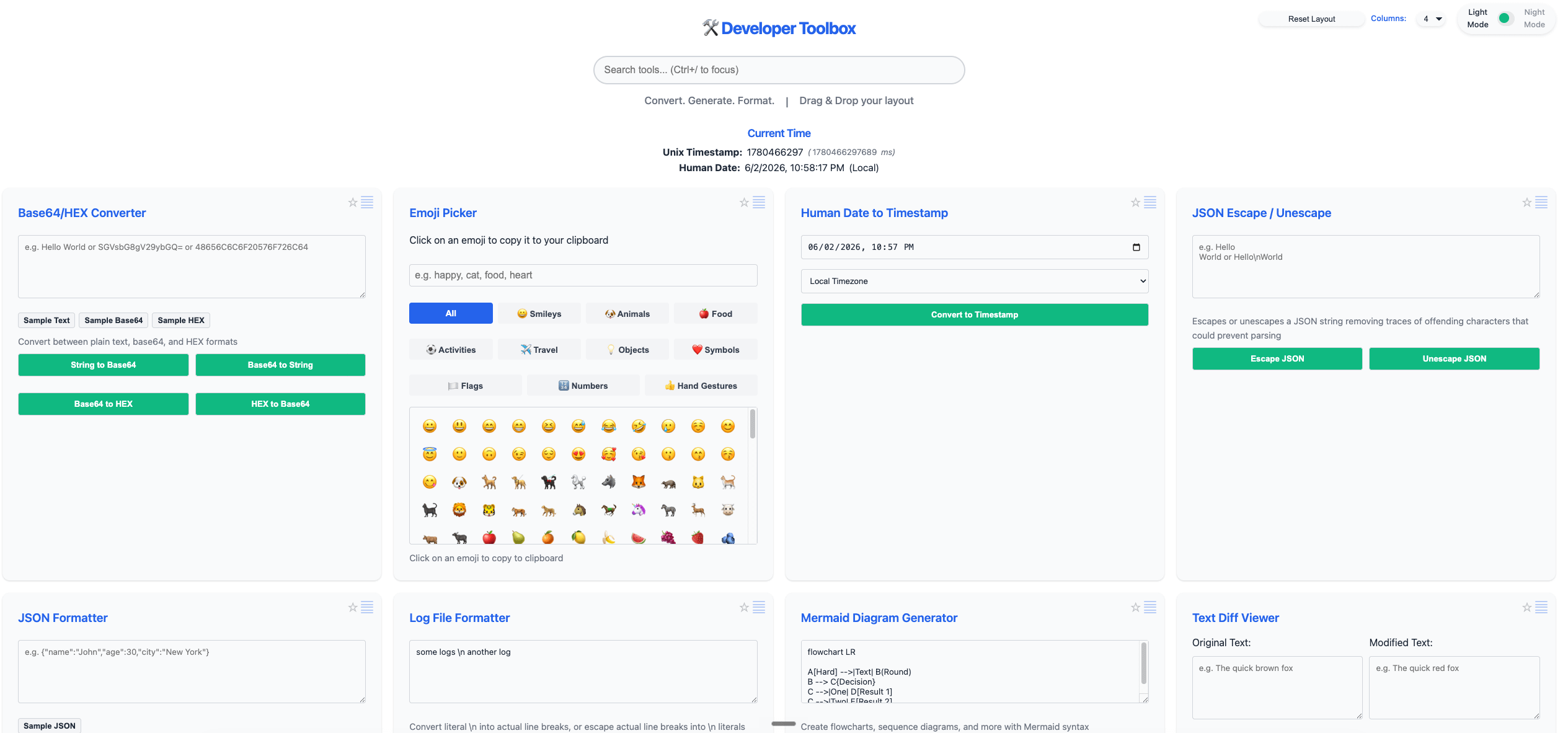
It’s a simple, client-side utility site hosting everyday developer tools: UTC-to-local time converters, string/base64/HEX converters, and formatters for XML, JSON, YAML, and log files. I built it because I was using these utilities constantly at work, pulling my hair out trying to align timezones or format strange-looking JSON payloads from customer tickets while debugging system logs and alerts.
The Thrill of the AI Workflow
At the time, the development loop felt like magic. I vividly remember days where I’d be working, realize I was missing a specific utility, and just open a GitHub issue. I’d assign it to the Copilot coding agent, it would create the PR, I’d merge it, and ten seconds later—voilà—the new tool was live.
Looking back, the early CodeX agent honestly wasn’t great. But the sheer momentum of it was exhilarating.
The last issue I ever created and assigned to Copilot for that project was Issue #57, dated August 24, 2025. There have been no changes since.
Don’t get me wrong, the site itself is still awesome. It’s entirely client-side rendered, making it perfectly secure, and I still use it occasionally. (I did leave a minor Google tracker enabled just to monitor usage—there is a unique satisfaction in seeing some random guy in Singapore use your tool a couple of times a week, lol.)
The Paradigm Shift
But this post isn’t a sentimental “RIP whattoolkit.com.” It’s a reflection on how rapidly AI is mutating how we work.
The primary reason I stopped developing the site is simple: I don’t need it anymore. Period.
I no longer handwrite log queries. I no longer need to manually copy-paste and format messy JSON from a Slack message to figure out what went wrong. The agent handles it now. My Claude Code agent connects to our internal MCP and pulls logs using complex Kusto queries—queries I didn’t even know existed before. (And I actually consider myself quite good at writing big data queries!)
My daily workflow has fundamentally shifted. I still review the queries from time to time, but my verification process has moved up the stack. I no longer review the syntax of the log query; I review the actual log entries and the system’s response to ensure it found the correct data.
The Uncomfortable Question
This whole experience brings up a fascinating question: Are we using AI to build things for a world that is rapidly disappearing?
It’s easy to fall into the trap of using new AI capabilities to optimize the old paradigms, the old norms, and our old assumptions. I used an AI coding agent to rapidly build a utility site from scratch, only to realize that the evolution of those very agents eliminated my need for the utilities in the first place.
I admit this is an “irresponsible” post for an engineering blog—it leaves you with a bothering question rather than a neat, actionable playbook. But it’s an observation I can’t shake as this industry revolutionizes our very jobs.
Hopefully, it’s revolutionizing them in a positive, promising way. Honestly? I’m enjoying the fact that I don’t even need my own tool site anymore.
Thanks for reading! If you're navigating the shift in engineering workflows or exploring AI adoption, consider subscribing for more observations. Connect with me over at yusizhang.com or on LinkedIn